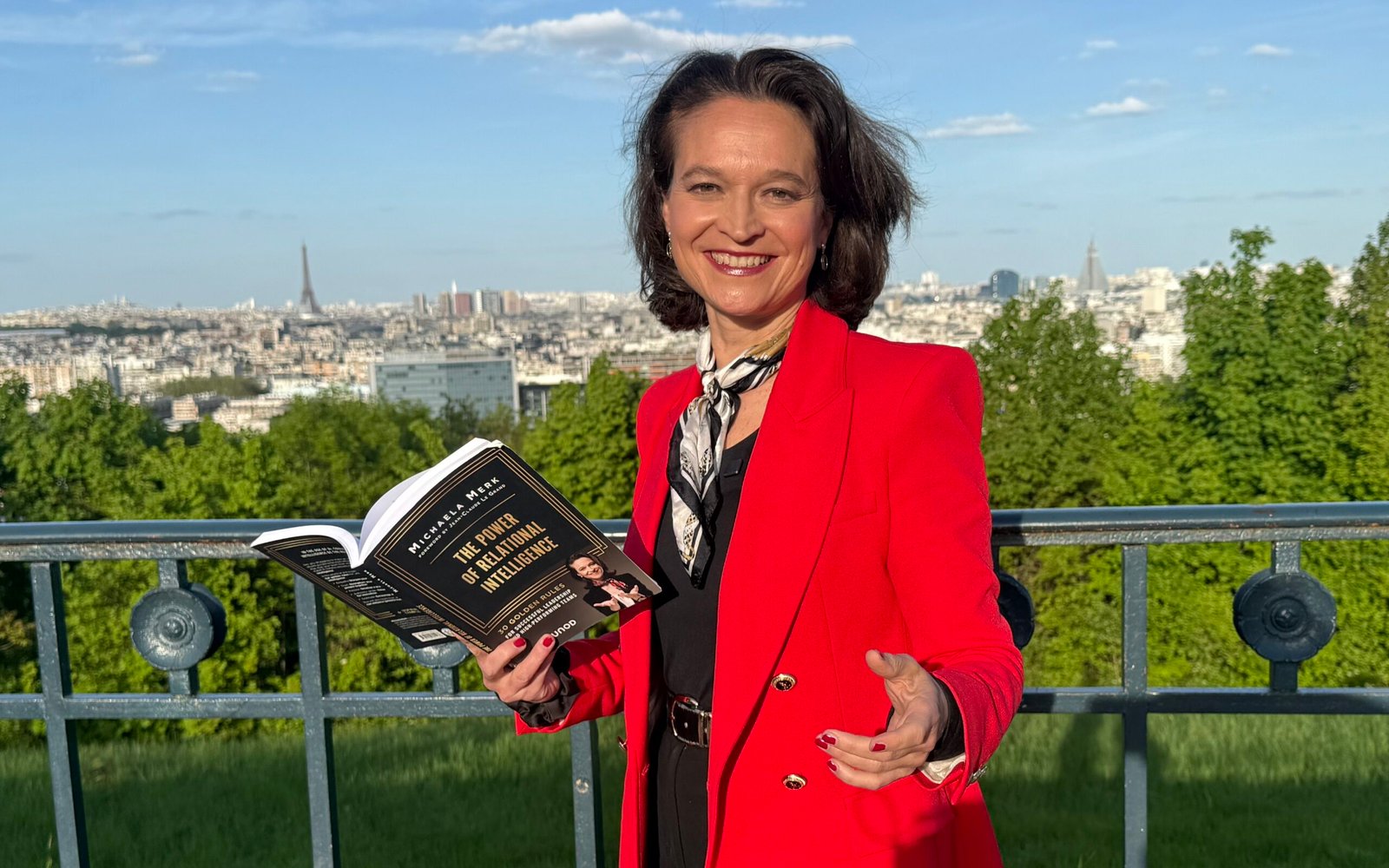
Prof. Dr. Michaela Merk completed her bachelor’s degree in Languages, Economic and Cultural Area Studies with a focus on Southeast Asian Cultural Area at the University of Passau from 1992 to 1997. From 1998 to 1999, she earned a Master’s degree in Marketing Management at ESSEC Business School in Paris. During her studies, Michaela gained her first practical experience at international corporations such as Nestlé, Danone, and Mercedes in Europe and Asia.
In 2000, she joined L’Oréal as a Product Manager for Travel Retail and, in 2003, assumed international responsibility as International Trade Marketing Manager. In 2005, she moved to MARIONNAUD, a leading global perfume chain with 1,400 stores, in the role of Category Director for Selective and Private Label Brands, before joining Estée Lauder Companies Inc. in 2008 as General Manager for the Bobbi Brown Germany brand.
From 2008 to 2012, Michaela Merk earned her Ph.D. in Marketing from the Université Paris-Sorbonne. Concurrently, she developed an extensive teaching career at various universities, including the International University of Monaco, the University of St. Gallen, the Université Paris-Dauphine, and ESSEC Business School, where she taught “Luxury Marketing and Management.” She continued her academic career as a professor at SKEMA Business School, serving as Director of the Master of Science in Global Luxury and Management (GLAM) from 2016 to 2019, and since 2022 as Director of the MSc in Sustainable Luxury Management at Audencia.
In 200G, Michaela also founded her company Merk-Vision and has been a motivational public speaker and trainer in the fields of customer experience, leadership, and premium and luxury, performing on stages in front of large audiences in more than 30 countries worldwide. She is currently the only professional speaker in Europe to have received the world’s most prestigious awards: the Global Speaking Professional (CSP) and the Global Speaking Fellow Award.
Through her TEDx talks and publications in renowned magazines such as Forbes and the Financial Times, Michaela has also made a name for herself and is now regarded as a leading expert on leadership, customer experience, and luxury. Her in-depth insights are regularly sought after in television interviews, making her expertise accessible to an international audience.
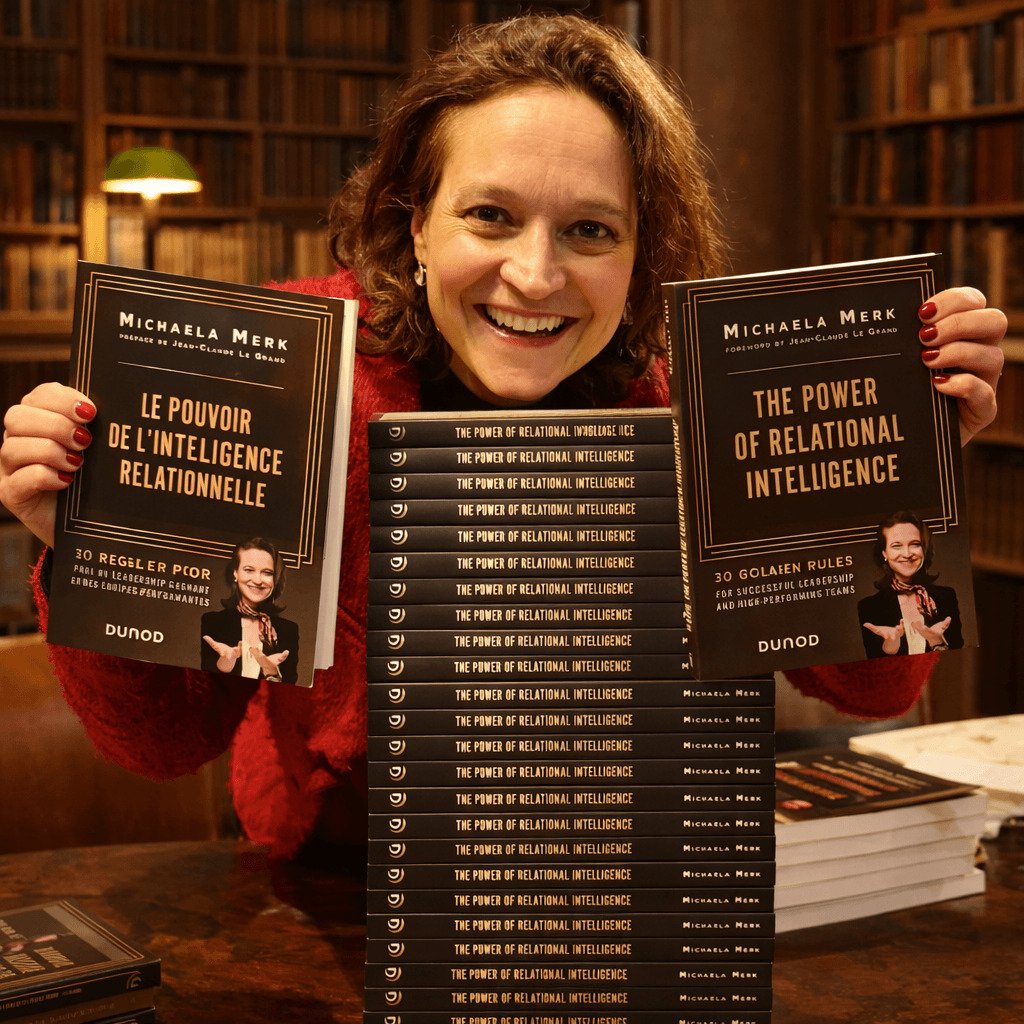
Michaela has published several management and marketing bestsellers. Her latest book was released in January 2026 under the title “The Power of Relational Intelligence: 30 Golden Rules for Successful Leadership and High-Performing Teams” (Dunod Verlag). It is based on 20 years of research, numerous interviews with successful leaders, and her own leadership experience. The book’s goal is to help companies build stronger and more sustainable relationships with customers and employees, thereby increasing their appeal and long-term performance even in difficult times.
Dear Michaela, what events or experiences from your studies or time as a student in Passau do you still fondly remember today?
Definitely the numerous field trips we were able to take with the Department of Southeast Asian Studies—then headed by Prof. Dr. Bernhard Dahm. He took his students, including those specializing in the culture of the Southeast Asian region,
to Vietnam, Indonesia, and other countries to bring culture to life. He taught us his subject with great passion.
Today, I try to pass on exactly this enthusiasm to my own students. That’s why I also organize excursions for my master’s students in the MSc Sustainable Luxury Management program at Audencia Business School in Paris to companies or regions where sustainable luxury can be experienced firsthand.
Your resume is absolutely impressive—my compliments. Did you deliberately pursue a career in the luxury segment of the cosmetics industry after graduation, or did it happen more by chance? What continues to fascinate you about it today?
Originally, I had planned to start my career in Southeast Asia. But due to the emerging Asian financial crisis in the late 1990s—right when I was about to enter the workforce—the region was hardly hiring young talent. Expat contracts were consequently hard to come by. A position I had already been promised by the Nestlé Group to take over the coordination of the Southeast Asian markets based in Singapore—was abruptly canceled.
Since I enjoy taking on new challenges, I eventually applied for a scholarship from the German Academic Exchange Service to study at a French business school—and I was actually accepted. This opened up a great opportunity for me, as these schools are notoriously expensive. I passed the entrance exams for the top three French business schools and chose ESSEC, which at the time had the largest international network.
That’s how I ended up in Paris, where I discovered both the luxury goods and cosmetics industries, as Paris is the birthplace of the largest luxury and cosmetics conglomerates. At the end of my one-year master’s program in Marketing Management, I landed a position at L’Oréal in the luxury segment. I stayed there for seven years—a formative time during which I gained comprehensive insights into brand management, sales, and the world of luxury.
Your dissertation addresses the topic “Strengthening sales force–brand relationships: A new management strategy for retailers?” What led you to decide to pursue a dissertation? Was it your gateway into the academic world and thus a deliberate step in your academic career?
I have always been passionate about sharing knowledge. That is why, alongside my entrepreneurial responsibilities—even during my time as a managing director—I taught at business schools and universities.
However, to delve deeper into the academic world and make the transition from lecturer to professor, a doctorate was necessary. This ultimately opened the doors to some of the most prestigious international institutions, including the University of St. Gallen and Audencia Business School, one of the leading business schools in France.
You began your career as a lecturer and professor back in 2003. What makes you thrive when working with students?
It’s especially fulfilling for me when I feel I can help a young person realize their dream career. Since I’ve personally experienced how to succeed in highly competitive, international corporations, I can teach my course material in a practical and realistic way.
Most students aren’t aiming for an academic career in research, but rather want to pursue a career in business. My background allows me to bridge the gap between the business world and the academic world.
It is particularly touching for me when I meet former students years later and hear them say things like, “You changed my life,” or “Thanks to your teaching, I was able to avoid many mistakes and chart my path much more quickly.”
I am also frequently invited by former students—who, after a few years, have built successful careers, even reaching top management positions—invited to train employees at their companies during conferences or training sessions. For me, this is the best proof of how profoundly professors can shape their students.
Student satisfaction is continuously measured in the academic environment through evaluations after each course. I was particularly pleased that, over the past two years, I was voted by the approximately 8,000 students at the Business School as the professor with the greatest influence on their professional development—among the roughly 180 tenured professors. Yes, that makes me beam.
How has the student generation changed since then?
Given today’s flood of information, we as professors are more than ever challenged to continuously deliver new content while simultaneously convey reliable, carefully vetted information. Students are increasingly questioning the accuracy and relevance of the knowledge being imparted.
At the same time, young people are accustomed to dynamic media formats that constantly stimulate them—which strongly shapes their expectations. A modern professor must therefore not only be convincing in terms of content but also inspire students through a lively and engaging teaching style.
Ten years ago, it was much easier to keep students satisfied. Today, expectations have risen significantly. I now find it more challenging to teach students than to mentor executives in companies. That’s because, alongside my professorship, I continue to work as a speaker and coach for top executives in leadership, team, and customer service training—and this target group is significantly easier to reach, not least due to generational differences.
In my view, it is similarly challenging for companies to retain and motivate this new generation over the long term.
You advise clients such as Dior, Hermès, and Rolex in the luxury sector on customer loyalty and leadership. In addition, you travel the world as a keynote speaker on your passion topic, Relational Intelligence, on major stages around the world, and you’ve been honored as the only female speaker to receive the Certified Speaking Professional (CSP) Award and the Global Speaking Fellow Award, among others. How did this passion for speaking come about? When did you realize, “This is exactly my thing”?
Speaking in front of people and inspiring them has always come easily to me, ever since I was a child. I won reading competitions in school, and I was able to further develop my stage experience through acting lessons. However, it wasn’t until I saw top speaker Jörg Löhr on stage in Passau—at the Nibelungenhalle, which still existed back then—that I realized this could one day become a career.
Nibelungenhalle—I saw the top speaker Jörg Löhr on stage. With his keynote, he captivated an audience of around 8,000 people. That made a deep impression on me.
In my corporate career as Marketing Director at L’Oréal and later as managing director at the Estée Lauder Group, I regularly took the stage myself—whether to present new products, motivate sales teams, or convince journalists. The feedback was often very touching, even including comments like: “You should be on TV.” My superiors and colleagues repeatedly asked me to coach them on their presentation skills (in French!!!). That was a clear signal.
I finally took the step toward becoming a professional speaker in 2010, when I went independent and founded my own company. Through this connection, I also came into contact with my first speaking agency, Speakers Excellence, which added me to its roster following a successful selection process. And so, a talent turned into a career that I continue to pursue with great enthusiasm to this day.
My central focus is relational intelligence in business—with the goal of helping executives retain their teams over the long term and assisting sales and service staff in building sustainable customer relationships. I am particularly driven by a passion for connecting people—regardless of culture, age, or education. I have spent many years researching this topic, published numerous articles, and ultimately wrote my current book: *The Power of Relational Intelligence*. It has been published so far in French and English; I am currently still looking for a suitable publisher for the German edition. Since I deliver my lectures in three languages, my goal is to make the book available in multiple languages as well. Perhaps you know of a suitable German publisher?
The dream of making your knowledge accessible to others in book form came true in 2025/2C. How did this project come about?
During my 15 years of experience working in international corporations, I repeatedly led teams through challenging situations—during times of economic crises, brand mergers, corporate takeovers, and far-reaching restructurings. Especially during such phases, when employees often toy with the idea of leaving the company, strong leadership is crucial.
In doing so, I realized: The more difficult the circumstances, the more important—and at the same time, the more intense—the connection with employees becomes.
However, to understand which qualities truly foster this stable and sustainable connection with employees and customers, I didn’t want to rely solely on my gut feeling. I decided to investigate this topic scientifically—first as part of my approximately 400-page dissertation and later through the publication of several books.
I presented my latest book concept for “The Power of Relational Intelligence” in 2024 to the renowned French business publisher Dunod, where it was unanimously accepted by the editorial board. The book was selected as one of the strategically important works in the field of management, published first in French and then in English.
In my view, the timing of this topic is particularly relevant: With the increasing use of artificial intelligence, companies face the challenge of designing its use in a meaningful way while simultaneously of human talent. That is why the second part of my book is dedicated to the central question: How can artificial intelligence be used in a way that does not weaken human connections, but rather strengthens them?
Which skills or experiences from your studies continue to benefit you today?
Navigating diverse cultures like a chameleon. The intercultural competence I gained during my studies in cultural management makes it easier for me to adapt to any situation. Whether I’m on stage in Shanghai giving a lecture to an international audience, or in front of my students—who come from all over the world seeking knowledge—or when I’m conducting leadership training for top executives from a wide range of industries.
In my professional and academic work, I travel extensively around the world. I have significantly developed my ability to perceive different needs, moods, and tensions and to adapt flexibly to them, particularly through my studies of a cultural region like Asia—a region whose ways of thinking differ significantly from ours in Europe in many respects.
Your message to Gen Z.
Just because you’ve heard something two or three times doesn’t mean you’ve internalized it enough to actually apply it. So don’t say, “I’ve heard that before,” but rather ask yourselves: “Have I put it into practice yet?” and “What can I learn from this to keep improving?”
And of course, I’ll leave you with my personal motto: Carpe Diem—make the most of every day to get the best out of your life.
Thank you very much for the interview.
If you’d like to learn more about Michael Merk, check out one of his online platforms: